
Alzheimer’s is a condition that continuously affects your brain functioning through wasting away of the brain cells.
According to research, this brain disease is the key cause of dementia. Dementia is the nonstop worsening of thinking, social, and behavioral skills. The condition interrupts your ability to perform tasks independently.
A clear sign of Alzheimer’s is memory loss and forgetting things quickly. It’s a progressive mental disease that can eventually impair your memory, and you become unable to carry out your daily activities. This condition is not purely age-related since you can fall a victim even at a young age.

Some Statistics
According to research, roughly 200,000 Americans below the age of 65 have young-onset Alzheimer’s disease. Alzheimer’s is ranked as the sixth deadly disease in America. Conversely, recent studies conducted indicate that this mental disease may rank third in America, following heart diseases and cancer.
If you are more than 80 years, you may live for three or four years and die. And if you are young, you can live for more than ten years. Research confirms that of every three Americans living with Alzheimer’s, two are women.
Origin of the Name Alzheimer
The disorder is named after Dr. Alois Alzheimer. In 1906, Dr. Alois found out that there were alterations in the brain tissues of a lady who succumbed to an abnormal mental illness. She experienced symptoms like communication difficulties, memory loss, anger management issues, and unusual behavior.
After her death, the doctor scrutinized the brain and realized that there was strange intertwined bundles fiber. They are commonly known as neurofibrillary and clumps, currently known as amyloid plaques.
If you have Alzheimer’s, there are high chances that there is a loss of connection between your brain neurons.
Initially, the brain damages are mild, but as you age, the damages become severe. The impairment begins with the hippocampus, which is the segment of the brain meant for storing memories. As the neurons keep on dying, the other parts of the brain get affected. With time, the condition will make your brain tissues to shrink significantly.
Effects of Alzheimer
If you have this mental disorder, you will have challenges in performing your daily tasks. You will find it hard to cook a meal, discuss and solve issues, or drive a car. You may ask similar questions over and over. You will lose things quickly and can’t trace them with ease.
You will get lost severally because you can’t remember directions. Small and easy things will start to confuse you. Over time as the disease progresses, you will have mood swings. You will also get upset and angry quickly, and you may turn to be violent. You will find it hard to make a reasonable judgment or the right decision.

Although there is no cure for Alzheimer’s, proper medication can help lower the rate of brain decline and improve the symptoms. Some programs offer support to people battling Alzheimer’s.
How to Lower Symptoms of Alzheimer’s Disease
Although Alzheimer’s is incurable, there are fruitful ways of lowering its symptoms.
- Refrain from smoking – smoking negatively affects your overall health and also harms your brain.
- Avoid other related health issues like diabetes, smoking, high blood pressure, and high levels of cholesterol.
- Engage in aerobics and other physical exercises to keep you active. Working out also prevents you from gaining weight. Also, participate in social activities.
- Make good use of your cognitive skills.
- Be careful about your mental health.
- Stick to a healthy diet – eat more vegetables, lean proteins, and fruits – adopt the Mediterranean diet.
5 Common Brain Damaging Neurotoxins Found in Most Foods
Did you know that some of the common foods you consume frequently affect your brain? Most of these foods are tasty, and many people think that they are healthy, but the fact remains that they are not.
Some of these foods negatively affect the brain resulting in mental illness in the long run. In this article, we unveil five common neurotoxins found in foods that you consume almost every day.
Aspartame
These are the artificial sweeteners used in sugar-free sodas, chewing gums, and candies. This artificial sweetener causes anxiety, migraines, memory loss, insomnia, and Alzheimer’s disease. Likewise, these sweeteners result in accumulation of stubborn belly fat which is a threat to your health.
Research reveals that between 1982 and 1995, there were 7000 aspartame effects reported to the Food and Drug Administration (FDA) in the US.

Every manufacturer aims at getting more customers for their products. However, some won’t disclose the full details to the consumer. You will, therefore, think it is safe to consume a product labeled ‘sugar-free.’ But the fact remains that they have used the brain-damaging aspartame.
Monosodium Glutamate (MSG)
This is a harmful neurotoxin that serves the same purpose as salt. It is commonly used in packaged food. Consuming high levels of this toxic salt means high amounts of MSG. Many Chinese restaurants use this salt in their cuisines.
Many canned soups, refined soy products, ramen noodles, processed meat, and salty snacks like crisps, contain this toxic salt. Likewise, many flavorings, spices as well as broths contain MSG.

The truth is that you will never see these foods and snacks labeled that they contain monosodium glutamate. Most manufacturers will only state that they have used ‘natural flavoring.’
When you consume food with high amounts of MSG, the food quickly changes into body fat, instead of being used for energy and building muscles. You then grow fatter as a result of using this artificial salt.
Additionally, it increases your appetite, and it becomes addictive. The addictiveness makes many manufacturers use it in making snacks. It’s, therefore, thoughtful to avoid packaged food.
Diacetyl
Popcorns contain butter “flavoring” and an additive known as diacetyl. The companies that make popcorns won’t openly label it, stating that they used the harmful diacetyl. Instead, they will put an “artificial butter flavor” or “natural flavors” label. Whenever you see the above tags, it’s an indication that the popcorns contain the above neurotoxin.

Diacetyl hurts your brain as it crosses the brain’s protective filter, which is called the blood-brain barrier. The crossing has a detrimental impact on the brain since it causes Alzheimer’s. A practical solution is eating home-made popcorns.
Mercury
Research shows that most fish have high contents of mercury. There are vast environmental pollutants in the air and water. Swordfish, Shark, Chilean Sea bass, and Tuna fish are said to contain an unusual amount of mercury. Mercury also crosses the blood-brain barrier and accumulates in the brain resulting in mercury poisoning.
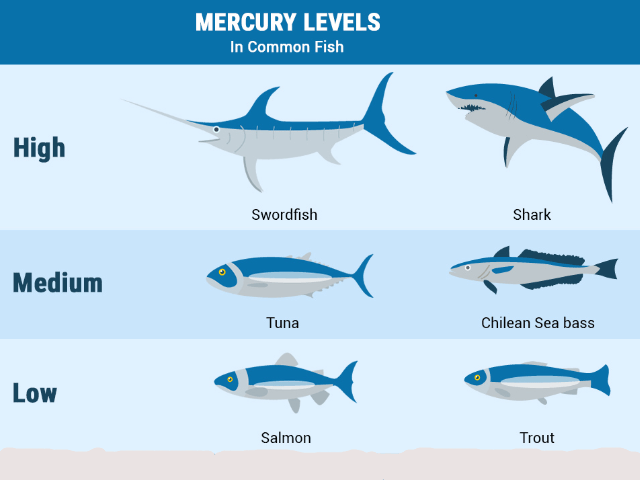
Common signs of mercury toxity are memory loss, anxiety, depression, numbness, tremors, and mood swings. On the other hand, fatty fish have minimal mercury content like Salmon, Sardines, Herring, Trout, and Mackerel. These fish are rich in omega-three fatty acids and contribute to a healthy brain.
Aluminum
There is a 50 years of proof that aluminum causes Alzheimer’s. Many producers of anti-caking agents, as well as baking powder, commonly use this component. Surprisingly, there is a lot of aluminum in tap water. It’s, therefore, advisable to drink filtered water for safety.
Also, most of antacids and deodorants (antiperspirants) contain aluminum. The best idea is to stick to one type of deodorant.

You will also find aluminum in cookware, aluminum foils, as well as cans. Instead of using these, make use of containers, cooking sheets, and glass bottles.
In conclusion, all of the above neurotoxins are harmful to the brain. They result in memory loss, poor cognitive, brain fog, fatigue, mood swings, brain and mental illnesses, and poor sleep.
Parting Point
Although genetics play a role, there are effective ways of alleviating the risk of getting Alzheimer’s. The environment, as well as your lifestyle, equally has an impact on your brain. A healthy diet and intense physical activities are some of the fruitful ways of lowering your chances of having this chronic mental disorder.
 Health and Fitness
Leave a comment